
Owning a home is a lot of work. Roofs leak, trees fall, paint peels, and furnaces break. If you live out in the country, there is even more to think about. Are your well and septic systems working properly, and is your water safe to drink?
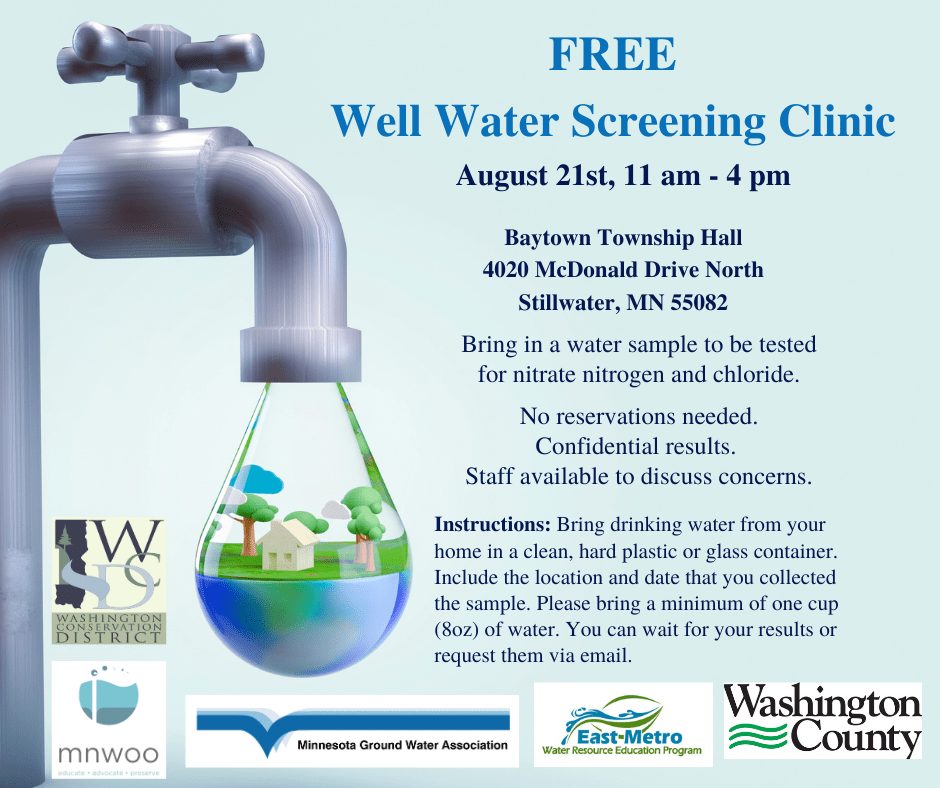
On Thursday, Aug. 21 (11am-4pm) local residents with private wells are invited to bring water samples for testing during a free clinic at Baytown Town Hall (4020 McDonald Drive N.), hosted by the East Metro Water Education Program; Lower St. Croix Watershed Partnership; Washington County; Washington Conservation District; Brown’s Creek, Carnelian-Marine-St. Croix, Middle St. Croix, Rice Creek, South Washington, and Valley Branch Watersheds; Minnesota Groundwater Association; and the Minnesota Well Owners Organization.
During the clinic, volunteers will run a screen test to measure nitrate and chloride (salt) and will also offer one-on-one consultations to discuss wellhead protection and groundwater concerns, including arsenic, bacteria, pesticides, and Perfluorinated Alkylated Substances (PFAS). PFAS testing will NOT be conducted at this clinic.

Currently, 100% of drinking water in Washington County comes from groundwater. Groundwater also flows into and through cold-water trout streams, such as Brown’s Creek and Valley Creek; popular lakes, including Lake Elmo, Square and White Bear; and unique natural features such as a tamarack bog in Woodbury and black ash swamps along the St. Croix River. Nitrates and chlorides can degrade natural resources and also affect the safety of our drinking water supplies.
Chloride concentrations have been increasing in the Minnesota, St. Croix, and Mississippi Rivers since 1985 and there are 67 lakes and streams in the state that are classified as “impaired” for having too much chloride (Minnesota Pollution Control Agency). The MPCA has also found that 16% of shallow monitoring wells in the Twin Cities area have too much chloride. Chloride in drinking water can corrode lead and copper pipes, leading to additional health concerns.

Nitrate from fertilizer is another common groundwater contaminant. Through its Township Testing program, the Minnesota Department of Agriculture (MDA) has found that 9% of wells in communities with significant row crop production have nitrate levels above 10 mg/L (the health risk limit). In some locations, the percentage of private wells with elevated nitrates is even higher. This includes Cottage Grove (28%) and Denmark Twp. (14%).
The biggest risk associated with elevated nitrates is a disorder called “blue-baby” syndrome (methemoglobinemia), which can affect pregnant women and infants younger than six months old that drink formula mixed with water. Blue-baby syndrome reduces the oxygen carrying capacity of blood, causing babies to turn bluish, and can also cause long-term digestive and respiratory problems. A growing body of scientific evidence also suggests that elevated nitrates may cause health impacts for adults, including increased heart rate, nausea, headaches, and abdominal cramps, and possibly gastric cancer.

To participate in the free well water screening clinic on Aug. 21, bring water from your home tap (minimum of one cup – 8oz) in a clean, hard plastic or glass container. If possible, it also helps to look-up details about your well, including depth and year of construction. After dropping off your water sample, you can wait for your results or request them via email. This clinic is free and open to everyone, regardless of what city, county or state you live in.

 East Metro Water